Saturn
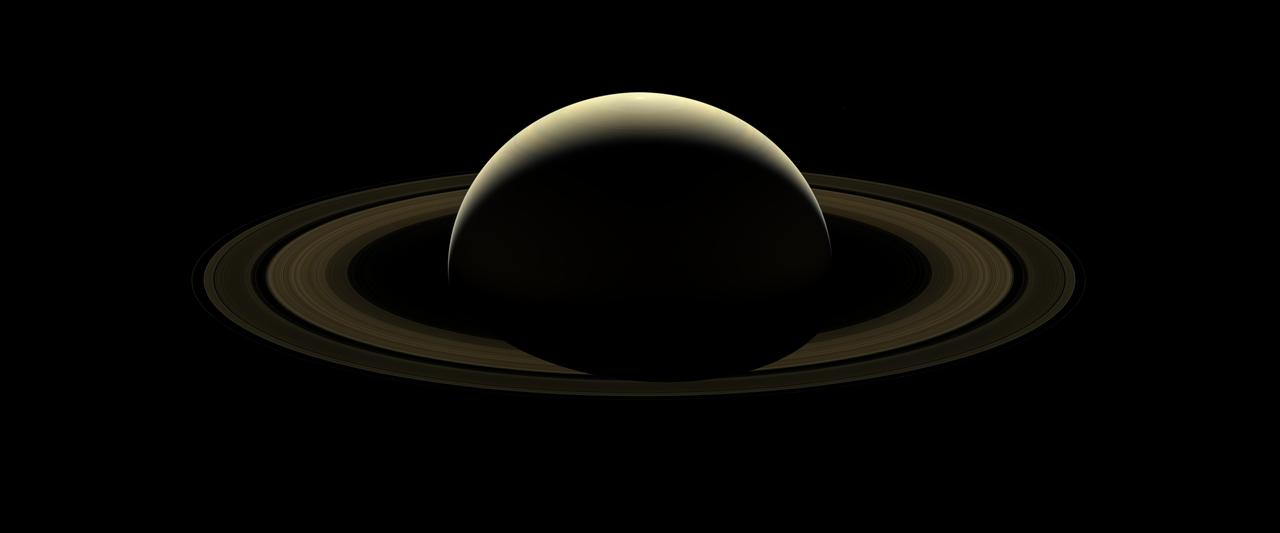
planetSaturn's ring system is the most spectacular sight in any telescope. Even at 30x magnification the rings are clearly resolved, and at 100x the Cassini Division — a 4,800 km gap between the A and B rings — becomes visible. The planet reaches magnitude -0.5 at opposition with a disk of 18-20 arcsec, while the rings span up to 44 arcsec. The ring plane tilts on a 29.5-year cycle; when edge-on (next in 2025), the rings nearly vanish, and ring moons become easier to spot. Galileo observed Saturn's rings in 1610 but couldn't resolve them, describing 'ears'. Huygens identified the ring in 1655 and discovered Titan. Named for the Roman god of agriculture. Pioneer 11 flew by in 1979. Voyager 1 and 2 (1980-81) revealed the intricate ring structure, thousands of ringlets, and spoke features. Cassini-Huygens orbited for 13 years (2004-2017), the most comprehensive outer planet mission ever flown. The Huygens probe landed on Titan in 2005 — the most distant landing in history — revealing methane lakes and a thick nitrogen atmosphere. Cassini discovered geysers of water ice erupting from Enceladus's south pole, indicating a subsurface ocean. Saturn has 146 known moons; Titan, visible in small telescopes, is the second-largest moon in the solar system.
Position
22:59:06Saturn Ring System
Rings moderately open